At the Bay of Bengal Conversation 2026, I found myself listening for one word.
The opening remarks centered on power, technology and trust in an age of uncertainty. Participants devoted considerable attention to technology—especially artificial intelligence—and underscored how governments and world leaders are struggling to keep policy in step with a technology that is outpacing existing rules.
The speaker continued, waiting for the third term—trust—asking how it is built, how it can disappear and, most importantly, who gets to shape either process.
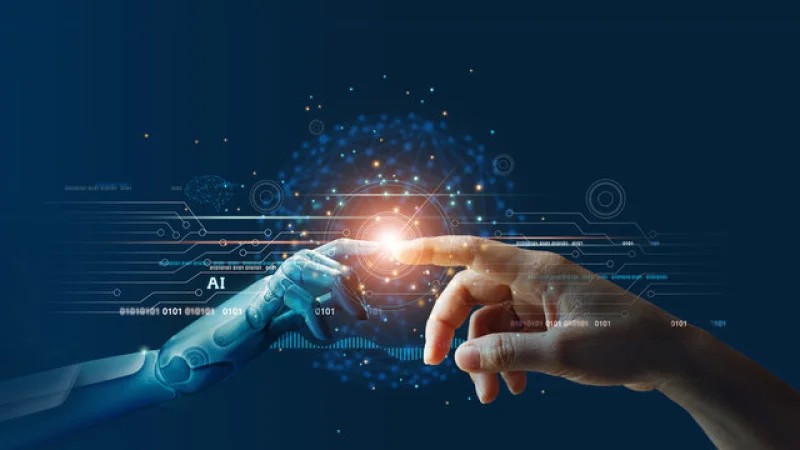
After leaving the session, the speaker said the questions raised were more important than the technology itself, emphasizing that AI does not build or destroy trust on its own. According to the speaker, people create and dismantle trust, and they decide how the technology is designed, who controls it and for what purposes.
Historian of technology Melvin Kranzberg articulated this view decades ago. In his first law he observed that “technology is neither good nor bad; nor is it neutral,” and his sixth law stated more plainly that “technology is a very human activity.”
That observation feels remarkably current in the age of AI.
The commentator observed that comparable incidents had occurred nearby, recalling the Ramu case.
In late September 2012, a photograph depicting the desecration of the Qur’an appeared on Facebook and was linked to a young Buddhist man in Ramu, Cox’s Bazar; he denied posting the image.
The story spread quickly, and on September 29‑30 mobs attacked the Buddhist community. In Ramu alone, at least twelve Buddhist temples and monasteries and more than fifty houses were destroyed.
A subsequent judicial inquiry cleared the young man of wrongdoing, determining that he had been a victim of social‑media misuse, and noted that the violence extended beyond Ramu.
Six years later the same pattern emerged on a far larger scale just across the border. In its 2018 report on Myanmar, the United Nations Independent International Fact‑Finding Mission described social media’s role as “significant” and said Facebook had become a useful tool for individuals intent on spreading hate, noting that for many users the platform was effectively the only internet access. The mission added that the real‑world impact of Facebook posts and messages required independent investigation.
Neither of the incidents involved artificial intelligence. Both were human‑driven narratives in which a powerful communication technology intersected with fear, grievance and individuals prepared to exploit it.
Generative artificial intelligence alters the landscape by making deception cheaper, faster and more convincing. Fabricated voices, images or videos can now be produced and distributed on an enormous scale.
The appetite for deception is not new, and research highlights an unsettling aspect of why such content spreads. In a 2018 study published in *Science*, Soroush Vosoughi, Deb Roy and Sinan Aral examined roughly 126,000 verified true and false news stories shared on Twitter between 2006 and 2017.
According to the researchers, false stories were 70 % more likely to be retweeted than true stories. Even after controlling for bots, the disparity persisted, indicating that human behaviour—not automated accounts—was responsible for the broader dissemination of falsehoods. Moreover, false stories provoked a higher incidence of reactions linked to surprise, fear and disgust.
That should give us cause for pause. The challenge is not always about persuading people of a single falsehood; at times it may simply involve sustaining enough anger, surprise or fear to undermine trust in what is presented.
Robert Putnam, in his book *Bowling Alone*, explained that people are more likely to trust one another when they actually know each other, interact regularly and belong to communities where behaviour has consequences. He adds that the AI debate often becomes too technical at this point.
Francis Fukuyama advanced a related argument in his book *Trust*, defining trust as an expectation of regular, honest and cooperative behaviour rooted in shared norms, and linking it to societies’ capacity to work together and achieve prosperity.
The observation raises questions about the impact of increasingly screen‑mediated social interactions. A mobile phone can deliver vast amounts of information yet fail to provide the interpersonal relationships required to evaluate that information. Likewise, a social‑media feed can convey the opinions of millions of strangers while distancing users from the neighbour living next door.
The 2026 Edelman Trust Barometer presents a stark illustration of this issue. The study, which surveyed 33,938 individuals across 28 countries, found that 70 % of respondents were unwilling or hesitant to trust someone whose values, information sources, approaches to social issues or cultural background differed from their own.
Edelman characterises the phenomenon as “insularity.” The firm also notes that the disparity in its trust index between high‑income and low‑income respondents has expanded from six points in 2012 to 15 points in 2026.
The data do not measure artificial intelligence itself but rather reflect societal characteristics. They indicate that a community already fragmented by identity, insecurity and distrust is more vulnerable to manipulation through powerful communication technologies, whether that was Facebook in 2012 or generative AI today.
The underlying issue in the AI regulation debate concerns who controls the technology. Economists Daron Acemoglu and Simon Johnson, in their book *Power and Progress*, argue that technological progress does not automatically distribute its benefits widely.
The trajectory of technological change is shaped by the decisions made, the institutions involved and the entities that hold decision‑making power. Technology may advance broad prosperity, yet it can also be directed toward narrow interests.
Their broader collaboration with James Robinson on institutions reinforced the same conclusion. When the Nobel Committee awarded the 2024 Nobel Prize in Economic Sciences to the three economists, it cited their research on how institutions are formed and how they influence prosperity.
The analysis differentiates inclusive institutions—where citizens hold a substantive role in governance—from extractive institutions, in which political and economic authority is confined to a narrow elite.
The distinction is highly significant for artificial intelligence. The development of frontier AI is taking place in a setting where access to computing power, data, specialised talent and capital is not evenly distributed.
Stanford’s 2026 AI Index reports that industry generated more than 90 % of the notable frontier models in 2025. A UK government assessment reaches a similar conclusion, stating that the scale of funding, expertise, data and computational resources required for frontier development is likely to keep it concentrated within a small number of companies.
The concentration of wealth is also part of this dynamic. According to an Oxfam report released in January 2026, billionaire wealth increased by more than 16% in 2025 to reach $18.3 trillion. The report estimates that billionaires are over 4,000 times more likely than ordinary citizens to hold political office, and states that the combined wealth of the poorest half of humanity is smaller than that of the world's 12 wealthiest billionaires.
These figures are Oxfam's estimates, based on its own methodology, and should be read in that context. However, they illustrate the scale of the concentration of resources and political access that now surrounds some of the world's most powerful technologies.
The difficult question, then, is not simply whether artificial intelligence is powerful. It is whether institutions are strong enough to make sure that extraordinary power remains accountable.
None of this implies that the regulation of artificial intelligence should cease. Rules are needed regarding transparency, accountability, data protection, and synthetic media. Governments must determine how to address deepfakes, automated decision-making, and the increasing power of the companies that develop these systems. However, regulation operates within society rather than above it.
If institutions are trusted, rules have a better chance of working, whereas if they are weak, divided, or captured by powerful interests, even well-designed rules can become instruments of selective enforcement. That is why the speaker keeps returning to something much older than artificial intelligence: the strength of the social fabric around us.
People need real communities to belong to, including public spaces, libraries, playgrounds, clubs, neighbourhood organizations, and campuses where individuals encounter others who do not necessarily think like them.
People also need things that make life worth looking up from the screen for, such as affordable culture, sport, music and recreation. Otherwise, the endless feed becomes the easiest form of escape.
We need institutions that reward merit rather than loyalty, whether in public service, business, or politics. Furthermore, we need something even more basic for young people: a believable path into the future.
Hope works better when there is a pathway behind it. None of these things sounds particularly high-tech, which perhaps is precisely the point.
The AI debate will continue, and models will become more capable as regulation evolves. Companies and governments will keep competing over technology, data, infrastructure, and influence. However, regardless of how powerful artificial intelligence becomes, the consequences will still depend on human choices.
Following a panel discussion on power, technology, and trust, the speaker reflected that the more difficult question is not whether we can trust artificial intelligence, but whether we still trust one another and whether our institutions have provided enough reason to do so. Observing that the artificial intelligence story is fundamentally a human story, the speaker concluded that its ending will be human as well.
Aminul Ehsan is a democracy, governance and political parties expert.
Why it matters
The consequences of artificial intelligence depend on human choices and the strength of societal institutions rather than the technology alone.