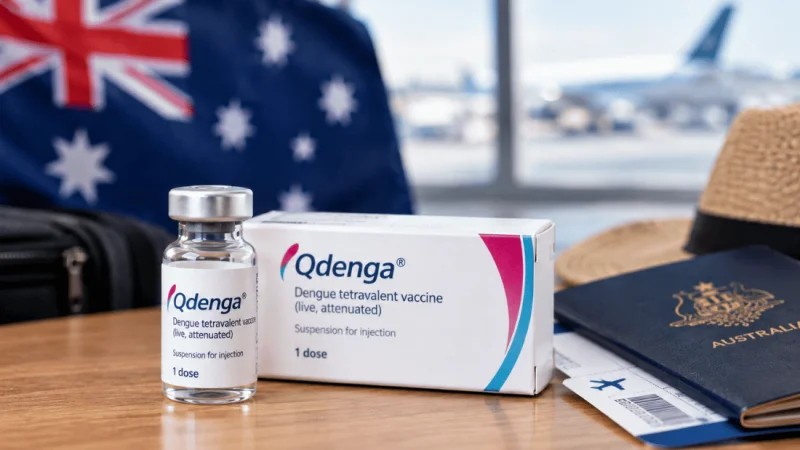
As Bangladesh grapples with widespread dengue, the availability of a dengue vaccine in Australia has introduced a new preventive option for Bangladeshi expatriates who are concerned about travelling home with their families.
Qdenga, a vaccine designed to protect against dengue disease, has become available in Australia following approval by the Therapeutic Goods Administration (TGA), with the Australian Technical Advisory Group on Immunisation (ATAGI) issuing clinical advice on its use in September.
This development holds particular significance for Bangladeshis residing in Australia, a large number of whom frequently travel back home with their children and other family members. These individuals have grown increasingly concerned regarding the rising number of dengue infections and fatalities occurring within Bangladesh.
Qdenga is approved in Australia for people aged four years and above.
However, health authorities do not recommend that every traveller automatically receive it.
The Australian Technical Advisory Group on Immunisation (ATAGI) particularly recommends the Qdenga vaccine for eligible individuals who have previously contracted dengue and remain at risk of future exposure.
For individuals aged four and older who have never contracted dengue and are planning short-term travel, vaccination may be considered after conducting an individual risk-benefit assessment.
For Bangladeshi families in Australia, the vaccine provides an additional option to discuss with their doctors prior to traveling home.
Mohammad Irfan Khan, a resident of Lakemba in Sydney, is planning to take his children to Bangladesh during an upcoming holiday.
He said that reports concerning the dengue situation in Bangladesh, and particularly the infections and deaths among children, had been a source of anxiety.
Following the availability of Qdenga, he intends to consult a physician to determine whether his children should receive the vaccine prior to the trip.
Another expatriate, Syed Ashraf Ahmed, stated that dengue was a growing concern among Bangladeshis living abroad because they frequently heard about relatives, friends and acquaintances becoming seriously ill back home.
The availability of vaccination before travelling to Bangladesh, he said, offered some reassurance to expatriate families.
Qdenga is a live-attenuated vaccine targeting all four dengue virus serotypes.
The vaccine is administered in two 0.5ml doses. Under Australian guidance, the doses are given three months apart, and completing the two-dose course is important for maximising protection.
There is currently insufficient evidence to support routine booster doses.
Dengue is transmitted primarily by infected Aedes mosquitoes.
Symptoms can include sudden fever, headache, muscle and joint pain, nausea, vomiting, fatigue, and a rash. While many infections remain mild, severe cases of dengue can quickly become life-threatening.
Previous infection is particularly relevant because subsequent infection with another dengue serotype can, in some circumstances, carry a greater risk of severe disease.
Almost all dengue cases notified in Australia are acquired overseas, which highlights the risk faced by international travellers visiting countries where transmission is common.
Australia itself recorded 2,381 dengue notifications in 2024 and 1,863 in 2025, according to figures cited in the source material.
Health professionals stress, however, that vaccination does not replace protection against mosquito bites.
Travellers visiting Bangladesh and other dengue-affected destinations should continue to use mosquito repellent, wear protective clothing, and take other precautions to minimise their exposure.
For Bangladeshi expatriates preparing to visit home, Qdenga therefore does not remove the dengue risk.
However, it does provide something newly available in Australia: an additional preventive option that families can discuss with their doctors before travelling.
Why it matters
The vaccine provides Bangladeshi expatriates with a medical option to reduce dengue risks before traveling home, addressing ongoing health anxieties in the region.