Prime Minister Tarique Rahman’s assurance of state support for a potentially groundbreaking waste-to-fuel technology could be the glimmer of hope needed for Bangladesh’s energy future.
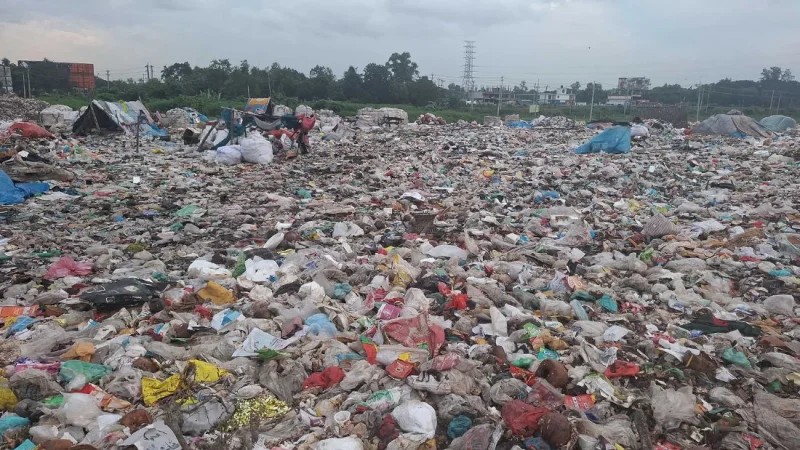
Developed over a decade of rigorous laboratory research by scientists at Khulna University of Engineering and Technology (KUET), the process presents an elegant solution to two of our most pressing national crises: urban waste accumulation and heavy reliance on imported fossil fuels.
If successfully scaled, converting sewage, agricultural residue, and kitchen waste into high-grade biocrude could save the country thousands of crore annually in foreign exchange while tackling severe environmental pollution.
However, even beyond the potential for such a process, we must encourage more of such home-grown innovation that represents the exact kind of forward-thinking science that our country urgently needs.
For decades, city corporations have struggled under the weight of unmanaged waste while the energy sector remains perpetually vulnerable to volatile global fuel markets and foreign currency shortages. A technology that addresses sanitation while producing domestic fuel is a significant win-win that deserves backing from the highest levels of government.
However, high-level verbal assurances alone do not build infrastructure, as we continue to unfortunately witness. Our history is littered with promising pilot concepts and academic breakthroughs that withered away in bureaucratic limbo due to a lack of timely funding, institutional coordination, and commercial scaling.
Expressing hope for the pilot project, officials stated it will process one to three tons of waste daily to evaluate the technology’s efficiency, production costs, and commercial viability. The estimated cost of the pilot project stands at Tk100-120 crore, with hopes that the government will firmly support its implementation to ensure success.
If we are truly committed to sustainable energy security and green innovation, we must encourage more innovation, according to the text. At present, we have a potentially game-changing homegrown solution, and we must ensure it is given the capital, urgency, and institutional priority required.
Why it matters
The waste-to-fuel technology promises to save thousands of crore annually in foreign exchange while addressing urban waste and fossil fuel reliance.