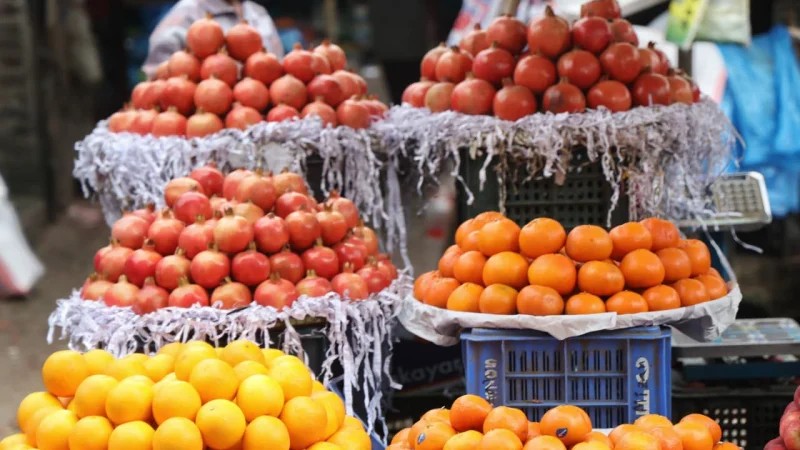
In Dhaka's market, the price of one kilogram of sweet orange (Malta) is currently Tk520 to Tk550.
During the same period, it sells for Tk100 to Tk160 in India, Tk80 to Tk130 in Pakistan, Tk130 to Tk180 in Nepal, and Tk300 to Tk400 in Sri Lanka.
This means the price of this fruit in Bangladesh is up to seven times higher than in neighboring countries.
This extreme price disparity is not limited to sweet oranges. A report by the Bangladesh Trade and Tariff Commission highlights similar trends across various imported foreign fruits, including apples, oranges, grapes, and dates.
The report indicates that high customs duties, inflated valuation assessments, hyper-profit-seeking seller cartels, and the classification of fruit as a luxury item are driving foreign imported fruits to sell at abnormally high prices within the country.
Consequently, these fruits have slipped beyond the reach of ordinary consumers. Once regarded as essential diet for patients, these fruits have now become a heavy burden on consumers.
The report reveals that while apples sell for Tk350 to Tk450 per kilogram in the domestic market, the price per kilogram in India is only Tk220. In Pakistan, it is Tk170; in Nepal, Tk240; and in Sri Lanka, a maximum of Tk450.
A similar pattern was observed in the prices of oranges, grapes, and dates.
According to business sources and a government report, fruit was classified as a luxury product approximately two years ago, despite having played a key role in meeting essential nutritional needs for years.
High import taxes were subsequently imposed as a result.
Furthermore, Customs assesses duties based on values higher than the actual booking prices in the international market.
Conversely, the market creates conditions conducive to monopolistic practices. A limited group of importers handles these shipments, leaving the market entirely reliant upon them.
There is a widespread tendency among importers, wholesalers, and retailers to seek excessive profit margins when selling fruit.
It is reported that in early September 2024, a circular issued by the Policy and Regulation Department of Bangladesh Bank categorized these fruits under luxury goods.
At the same time, the authorities instructed that imports be conducted with a 100% margin requirement in order to protect the domestic fruit market. From that point on, fruit prices began to rise unchecked.
The Tariff Commission states that import duties ranging from 96.10% to 121.78% are currently imposed on these fruit imports.
These include Customs Duty (CD), Supplementary Duty (SD), Value Added Tax (VAT), Advance Income Tax (AIT), Regulatory Duty (RD), and Advance Tax (AT).
In effect, almost every type of tax imaginable is levied on fruit imports.
Arbitrary valuation during assessment has further aggravated the crisis.
In response to urgent public health needs, Bangladesh Bank issued a circular in the middle of last month that waived the 100 percent margin reservation requirement for these fruit importers. However, heavy tariff rates on these items remain in force.
To resolve this situation, the Tariff Commission recommended several measures. Chief among them is the rationalization of the tariff structure.
The commission has suggested removing fresh fruit and dates from the luxury goods list and reclassifying them as essential commodities. Additionally, it proposed the withdrawal of regulatory and supplementary duties on these items.
Additionally, it recommended assessing customs valuation in line with international market rates and expediting clearance through a "Green Channel" due to the perishable nature of fresh fruit.
The commission also recommended easing Letter of Credit (LC) facilities for small and medium traders and expanding cold storage coverage.
Meanwhile, on Saturday (October 3), Commerce Minister Khondokar Abdul Muqtadir held an exchange-of-views meeting with traders and representatives of relevant government agencies to ensure adequate fruit supply and stabilize market prices.
Expressing dissatisfaction over the prices of imported fruits, including sweet oranges, he demanded an explanation from fruit traders on how the retail price per kilogram of sweet orange reaches Tk520 even after accounting for import costs, duties, taxes, and other expenses.
They noted that high duties, transportation costs, shipping and port complications, and losses from previous shipments have led many traders to reduce sweet orange imports. They added that, as perishable goods, these fruits carry significant financial risks during transit and storage.
Speaking on condition of anonymity, a leader from the Bangladesh Fresh Fruits Importers Association told Dhaka Tribune that the government's calculations exist only on paper. We are facing actual losses in real business.
Furthermore, high profit-seeking is rampant not just at the import level, but among wholesalers and retailers as well—something the government has failed to control through proper market monitoring, he added.
SM Nazer Hossain, vice president of the Consumers Association of Bangladesh (CAB), told the media that some traders take advantage of dengue outbreaks to create artificial shortages and inflate fruit prices. Fruit prices systematically spike at this time of year when diseases peak, becoming a recurring pattern.
He noted that although the government reduced duties on fresh fruit imports as recently as March, prices rose instead of falling.
He urged the National Board of Revenue (NBR) and other relevant agencies to enforce strict oversight.
Why it matters
The price surge puts essential nutrition out of reach for ordinary consumers and highlights structural issues in import policy and market regulation.