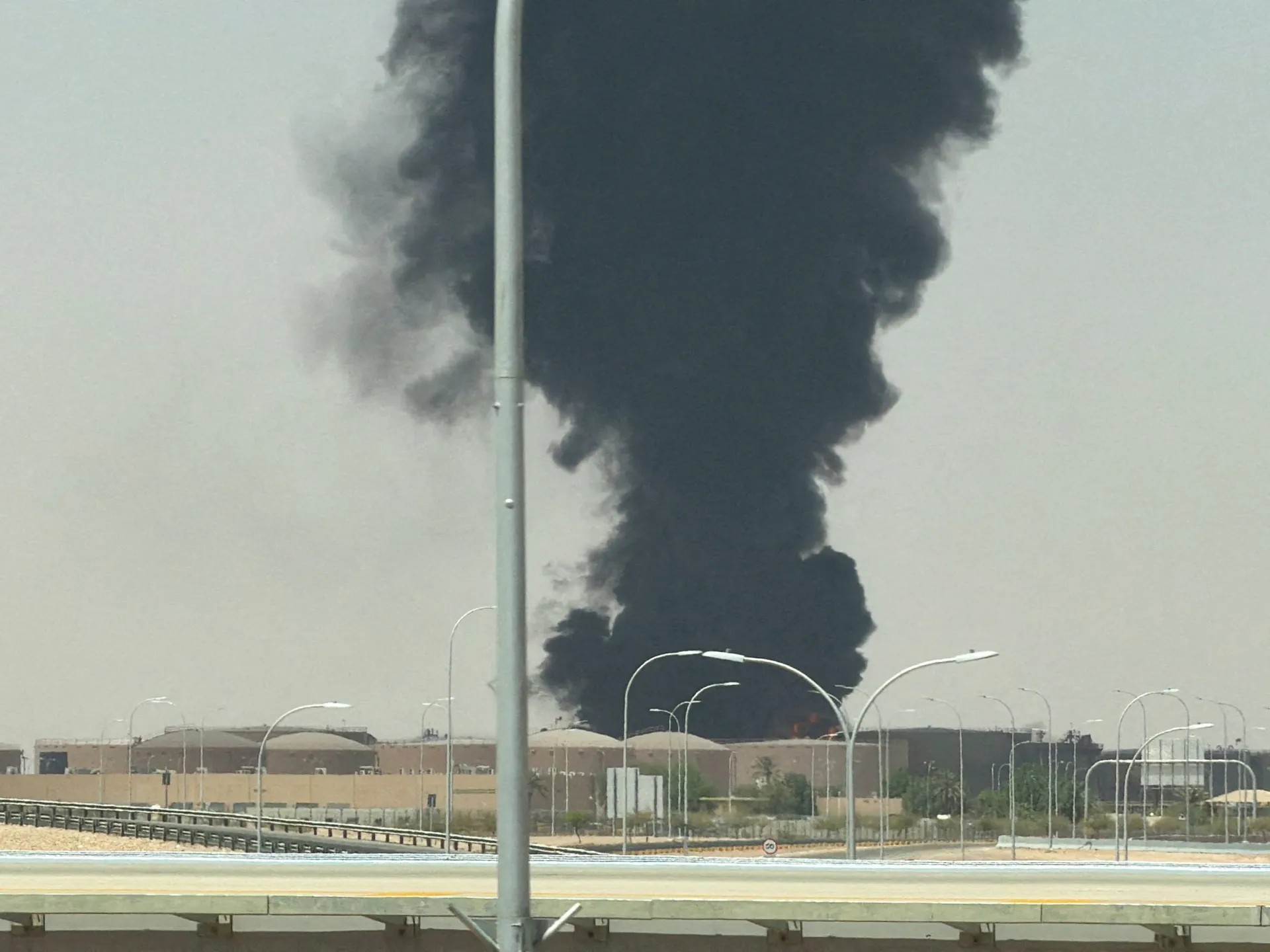
Saudi Arabia has stated that it will “firmly” retaliate against an attack on Riyadh’s international airport, which resulted in the deaths of at least 12 people. United States President Donald Trump described the attack as “terrible.”
On Sunday, the Saudi-led military coalition blamed Yemen’s Iran-backed Houthi group for Saturday’s attack on King Khalid International Airport, describing the incident as a “full-fledged war crime.”
The Houthis have not claimed responsibility for the latest strike.
However, on Sunday, the Houthis, also known as Ansar Allah (Supporters of God), renewed their warning to airlines, airport workers, and travellers against using Saudi airports. They stated that the warning should be taken seriously and that the kingdom "bore responsibility for failed interceptions".
The attack occurs amid escalating fighting between the Houthis and Saudi-backed Yemeni government forces following the collapse of a United Nations-brokered ceasefire that had been largely in place since 2022.
The fighting has raised fears of a wider regional confrontation, with Trump suggesting the United States could join Saudi military operations against the Houthis.
Dania Thafer, executive director at the Gulf International Forum, stated that Saudi Arabia will likely retaliate against the Houthis "pretty hard."
Thafer stated that the Saudis likely still desire de-escalation and wish to avoid long-term escalation, but noted that the Houthis are complicating the situation by posing a threat to both Saudi national security and international maritime security. "So this battle is much bigger than just a tit-for-tat," Thafer added.
According to Saudi Arabia’s General Authority of Civil Aviation (GACA), a missile struck King Khalid airport in Riyadh on Saturday. The strike killed 12 people and wounded 309 others, with some victims sustaining critical injuries.
Those killed in the attack included four Saudi nationals, two Bangladeshis, and one citizen each from the United States, Egypt, Jordan, Syria, Palestine, and Sudan. It marked the deadliest attack in the kingdom in more than a decade.
Coalition spokesman Major-General Turki al-Malki stated in a post on X that "the cowardly terrorist attack by the Terrorist Houthi Militia … which resulted in deaths and injuries among civilian passengers and airport staff, constitutes a full-fledged war crime."
The Houthis, who have not yet claimed responsibility for the attack, issued a warning on Sunday to all aviation companies, experts, employees, workers, and travelers advising them against using Saudi airports and airspace.
The group stated that these areas are "exposed to targeting and are a theatre of operations by our forces."
"They urge everyone to take our warnings seriously, and Saudi Arabia bears responsibility for any failed interceptions," military spokesperson Yahya Saree said in a post on X.
Airport operations were suspended, and flights were either cancelled or diverted. Following the attack, schools across Riyadh were ordered to switch to remote learning for a week.
The attacks have disrupted international flights, prompting several airlines to suspend services to destinations in Saudi Arabia. Later on Saturday, the Saudi-led coalition reported that a projectile had fallen near King Fahd International Airport in Dammam, located in the eastern part of the country.
Reporting from the Houthi-held capital, Sanaa, Al Jazeera’s Yousef Mawry stated that the Iran-backed group was retaliating by targeting what it termed Saudi Arabia’s “most precious assets,” specifically identifying Aramco oil facilities and the airport in Riyadh.
“Although Saudi Arabia has said it will retaliate, let’s not forget that it’s carried out many air strikes across Yemen, and the Yemeni group is still able to launch ballistic missiles and drones towards Saudi Arabia,” he added.
Iran-aligned Houthi forces have carried out a series of missile and drone strikes against airports, military installations and oil facilities throughout Saudi Arabia, including targets near the Yemeni border.
On Monday, two attacks targeted King Abdullah bin Abdulaziz airport in the southwestern city of Jizan and Najran international airport.
The assaults wounded three people and caused material damage, according to the General Authority of Civil Aviation (GACA).
On Tuesday, attacks on Abha airport and Riyadh airport killed three people and wounded 36 others, according to Saudi authorities.
The Houthis claimed they targeted an Aramco oil refinery in Rabigh on Saudi Arabia’s Red Sea coast with missiles and drones, saying the attack caused a fire, while Saudi authorities have not yet confirmed the claim.
The Houthis imposed a maritime embargo on Saudi Arabia in July following the outbreak of the latest round of fighting.
Yasmeen al-Eryani, the executive director for knowledge production at the Sanaa Center, said the Houthis are trying to put “maximum pressure” on Saudi Arabia.
“But they’re also mobilising the internal front lines in a really major way, moving even away from the west coast battle into Taiz and more densely populated areas,” al-Eryani, from the think tank based in government-controlled Aden, told Al Jazeera.
“We could see further mobilisation; they have very high momentum. They will probably continue to capitalise on that momentum, internally,” she said, adding that “the [Houthi] cross-border attacks” will put pressure across the region.
Al-Eryani added that the Houthis were “provoking” Saudi Arabia, the United States and regional states, which could potentially join in the conflict.
The Houthi-affiliated media on Sunday reported an air attack on Naqil al-Zarbi in the Hayfan district of Yemen’s Taiz governorate in southwestern Yemen, as well as a missile attack on the Sahar district in the northern province of Saada.
Forces belonging to Yemen’s internationally recognised government released footage purportedly showing the downing of a Houthi drone over Mount Sabr in Taiz.
Meanwhile, Saudi-led coalition spokesman Major-General Turki al-Maliki said early on Sunday that forces intercepted and destroyed a ballistic missile launched by the Houthis towards al-Kharj province, as well as a drone in the kingdom’s Eastern province.
On Saturday, Colonel Majed Abdullah al-Nazili, the spokesman for Yemeni government forces, said at least 1,150 Houthis were killed in almost 2,000 targeted operations across the country since the internationally recognised government’s counteroffensive began.
He said the army had destroyed Houthi ammunition dumps and at least 180 combat, transport and supply vehicles operated by the Houthis, adding that ground forces “continued to advance their assault”.
Al Jazeera was not able to independently verify the competing claims.
Fighting has intensified across several fronts in Yemen.
Saudi-backed government forces launched the Dawn of Yemen offensive on October 4 to recapture Houthi‑held territory, including the port city of Mocha and the island of Mayyun.
While the internationally recognised government’s forces said they had retaken Mocha and the Dhubab district near the strait, the Houthis have disputed the claims.
The Houthis have also tightened their siege of Taiz after capturing territory south of the city earlier this month, including al-Turbah. Taiz has been one of the most heavily contested cities in the war.
Fighting has also spread to Marib and al-Jawf, two governorates east of Sanaa, where government forces have reported advances against Houthi positions.
The attack has drawn condemnation from the US and the UN, while several foreign governments have warned their citizens to avoid the airport.
US Secretary of State Marco Rubio confirmed that an American was among those killed and condemned the attacks.
“These reprehensible attacks demonstrate a blatant disregard for innocent civilian life. They must stop now,” Rubio said.
UN Secretary-General Antonio Guterres condemned the strike, stressing that attacks against civilians and civilian infrastructure violate international law.
The United States, Canada, Germany and several other countries issued travel warnings, while some diplomatic missions restricted staff movements through the airport.
Pakistan’s Prime Minister Shehbaz Sharif described the attack as “heinous” and reaffirmed Islamabad’s commitment to Saudi security.
On October 5, Turkiye, Pakistan and Saudi Arabia agreed to activate “deterrence measures” under a mutual defence pact and rapidly deploy forces to the Gulf kingdom to counter attacks by Yemen’s Houthis. This came weeks after the three countries signed the Mecca Strategic Mutual Defence Agreement.
Trump has left open the possibility of US military involvement but has not announced a decision.
“We may. We’re going to look at it,” Trump told reporters on Saturday.
The US president said he planned to speak with Saudi Crown Prince Mohammed bin Salman, describing the attack as “not acceptable”.
According to US media reports, Washington has already provided intelligence sharing, target identification and planning assistance for the latest Saudi-backed offensive.
When the Saudi-led coalition intervened in the civil war in March 2015, Washington provided intelligence, logistical assistance and weapons to support its campaign against the Houthis, but did not directly participate in the coalition’s air strikes.
But in 2021, the Biden administration ended support for the Saudi-led offensive in Yemen, citing the humanitarian crisis. More than 100,000 Yemenis were killed and millions were displaced at the time.
Why it matters
Two Bangladeshi nationals were among the twelve dead in the Riyadh airport attack, directly linking the incident to Bangladesh.