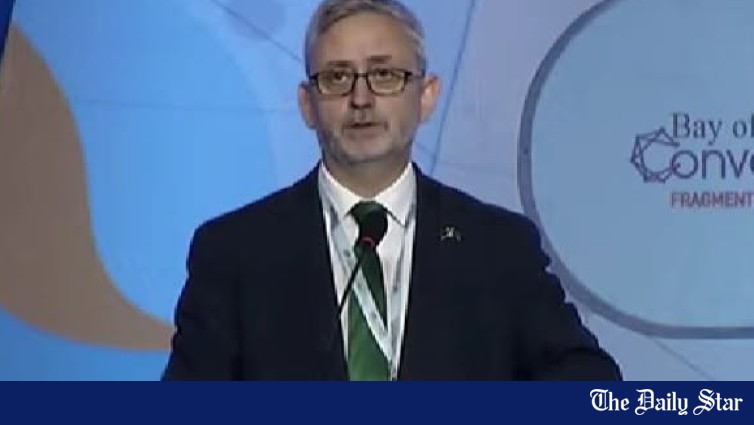
EU Ambassador Michael Miller told delegates at the Bay of Bengal Conversation 2026 in Dhaka that the European Union wants its future economic engagement with Bangladesh to be “balanced, reciprocal and mutually beneficial”.
He described Bangladesh as a partner of “growing strategic importance”, noting its “scale, ambition and consequence” in South Asia, the Bay of Bengal and the wider Indo‑Pacific.
Miller said the EU aims to move beyond the traditional donor‑recipient relationship as Bangladesh approaches graduation from least‑developed‑country status, and that the bloc is ready to explore a future free trade agreement.
Deeper economic ties, he added, will depend on accountable institutions, the rule of law, respect for labour and human rights, environmental protection and good governance.
Strong institutions, independent oversight and inclusive decision‑making, he argued, are essential for Bangladesh to withstand external, geoeconomic, climate, social and technological pressures.
The ambassador called for the continuation of constitutional reform efforts and broader political consensus to solidify these foundations.
Referencing the EU’s Everything But Arms trade‑preference scheme, Miller highlighted its role in underpinning Bangladesh’s development and lifting millions out of poverty.
As Bangladesh moves beyond LDC status, the EU stressed the need for a skilled workforce, diversified exports, stronger infrastructure and public‑administration reforms.
Miller said the EU seeks to combine European investment with technology, standards, innovation and long‑term capital while maintaining its emphasis on values and institutional safeguards.
He affirmed that the EU’s pursuit of strategic autonomy does not mean isolation, and reiterated commitment to international law, rules‑based trade, human rights, democratic accountability and multilateralism.
Why it matters
Strengthening EU‑Bangladesh economic ties will boost Bangladesh’s export diversification and support its transition from LDC status.